
A Thousand Leagues of Cloudless Skies – A Pilgrimage Journey Along the Silk Road
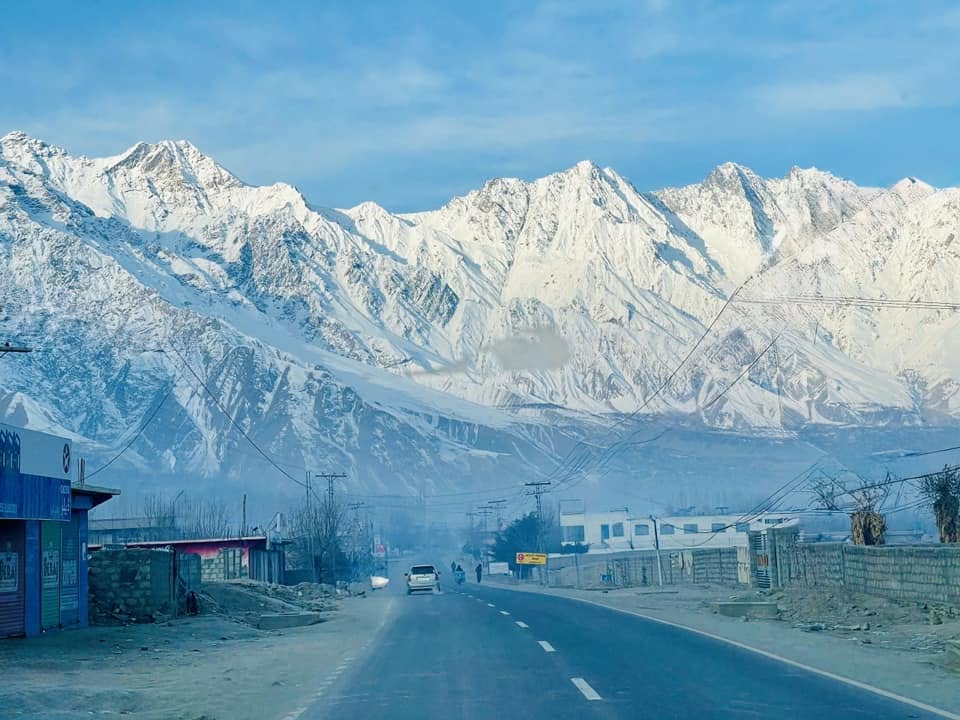
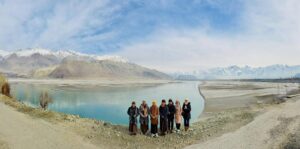
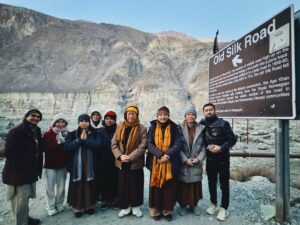
As the year drew to a close, with my home country of Vietnam bustling in anticipation of the 2025 Lunar New Year, I had the precious opportunity to journey across the trails along the Himalayas alongside Most Venerable Monk Phước Duyên and the venerable Sangha members from Huế. This pilgrimage evoked profound and boundless emotions, reflecting upon the ten-thousand-mile journey to the Western Heaven once traversed by Master Xuanzang. The winter sky and earth of Pakistan were freezing cold amidst rugged high mountain regions, where the legendary Silk Road preserves the footprints of merchants and monastics from both the Eastern and Western hemispheres. Across thousands of years, the brilliant Indus civilization continues to shift every trace of the ancients from the past toward the future along flowing waters, evoking the immortal pledge: “If I do not attain the Great Dharma, I vow never to return to the Eastern lands” — a testament to the extraordinary resolve of the eminent holy monk that shines through antiquity and modernity at the majestic Tian Shan.
1. Reflections from the Holy Land and Historical Imprints
The landscapes of Pakistan were marked by a biting winter chill in the rugged, treacherous high mountain regions. This land was once the legendary Silk Road, bridging the footprints of merchants and monastics across the Eastern and Western hemispheres. Across millennia, the brilliant Indus civilization continues to carry the traces of our predecessors from the past toward the future along its flowing waters. Standing before such a scene, the Master’s immortal vow—“If I do not attain the Great Dharma, I vow never to return to the Eastern lands”—serves as a testament to the extraordinary resolve of an eminent holy monk, whose shadow shines through both ancient and modern times at the majestic Tian Shan.
2. Perceiving the Extraordinary Will of the Ancients
I find resonance in the words from Clouds Without Number by Colin Thubron (Tôn Thư Vân) to express these emotions:
“The Great Tian Shan is a poetic yet majestic painting, but to Master Xuanzang during his westward journey of yore, danger lurked everywhere in Tian Shan; he had once even been made a sacrificial offering here. It was precisely here that I could truly feel the suffering on his path of seeking the True Dharma.”
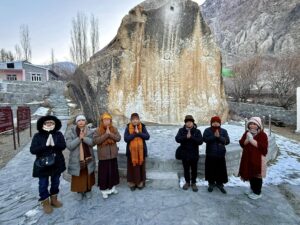
Only by physically walking these sacred paths can one truly perceive their extraordinary nature. The mesmerizing beauty of today’s Silk Road was, in reality, a source of profound dread for our predecessors whenever they took their steps westward. Reflecting on the wisdom of Buddhism preserved through the relics along these dusty, windswept roads, all words of exclamation seem insignificant before the inconceivable will and merits of those who came before us.
This pilgrimage journey concludes with verses brimming with contemplation amidst the skies and earth of Pakistan:
Muôn thuở sơn hà ngắm trời xanh
Dặm đường tơ lụa dấu thương hành
Không cánh chim trời mơ cố quốc
Mây trắng đâu rồi sao bước nhanh
(NTT)
Pakistan, January 14, 25
Nemo enim ipsam voluptatem quia voluptas sit aspernatur aut odit aut fugit, sed quia consequuntur magni dolores eos qui ratione voluptatem sequi nesciunt.
Duis aute irure dolor in reprehenderit in voluptate velit esse cillum dolore