
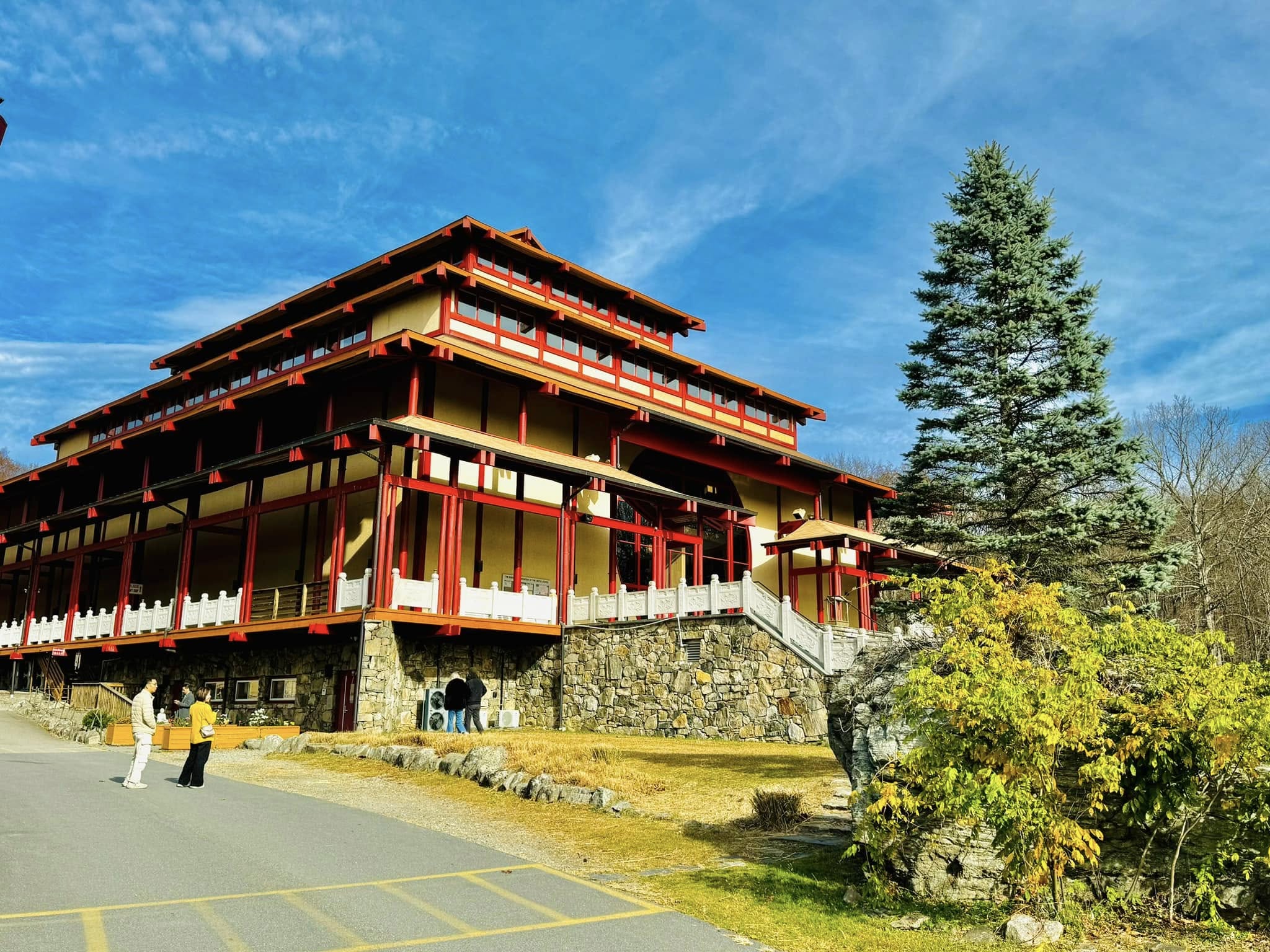
A Pilgrimage to Chuang Yen Monastery: Portrait of a Quiet Master in the Heart of America
Amidst the bustling hustle and bustle of the land of flowers and flags, few know that about a four-hour drive from JFK International Airport in New York lies a serene spiritual sanctuary named Chuang Yen Monastery. Nestled quietly amidst lush green pine forests and autumn-adorned maples across a sprawling 90-hectare estate, this place serves not only as the headquarters of the Buddhist Association of the United States (BAUS)—founded in 1964 by Dr. Shen, a prominent Chinese-American scholar, and serving as a center for propagating the Pure Land practice for overseas Chinese Buddhists in New York—but also as the profound and secluded sanctuary where Venerable Bhikkhu Bodhi resides in quiet cultivation.
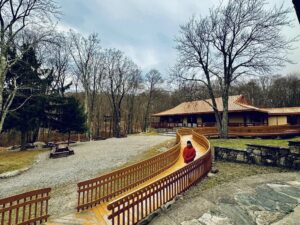
Right within this fairyland-like realm, the silhouette of an elder master quietly devoting his entire life to the monumental cause of translating the Buddhist canon evokes memories of the great translators in Buddhist history from East to West.
The Sanctuary of Quiet Cultivation and Venerable Bhikkhu Bodhi’s Journey
Since 2000, Chuang Yen Monastery has become the place of spiritual practice for Venerable Bhikkhu Bodhi. Hidden behind the brilliant red and yellow foliage of maple leaves stands a modest wooden hut, isolated entirely from the monastery’s main active areas. This is the meditation chamber of the Elder—where timeless Nikaya suttas have been translated from Pali into English with unwavering diligence and devotion.
Holding in one’s hands the monumental scriptural volumes painstakingly translated by the Elder, Buddhists can fully appreciate the inconceivable merits he has established, opening up a precious opportunity for Westerners to gain direct access to the pristine source of ancient teachings.
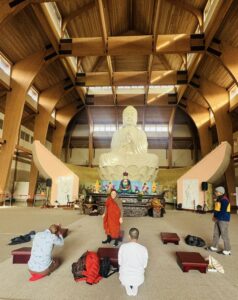
The Spirit of Diligence and the Vow of Liberation in the Face of Impermanence
Stepping into the meditation chamber of Venerable Bodhi, what startles and fills anyone with reverence is the image of a white skeleton hanging right beside his meditation seat. It is not merely an object of contemplation, but a constant reminder of the impermanence of human life: birth, aging, illness, and death.
In his eighties, with time growing short, the Elder is even more resolute and diligent. He sets himself a daily target of translating no less than 5,000 words of the sacred texts. He chooses a life of quiet seclusion and stillness in a remote corner of the monastery, shunning the chaotic noise of excessive visitors or unnecessary rituals. Nevertheless, whenever general monastery affairs at Chuang Yen require his presence, he always maintains a joyful and accommodating heart, fulfilling every duty completely.
With a swift stride and graceful gestures despite a heavily bowed spine, he retains a sharp and penetrating clarity in every word of his translations, bringing immense benefit to the fourfold assembly across Western lands.
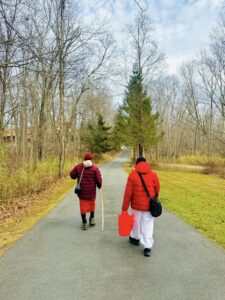
Gazing upon the image of Venerable Bhikkhu Bodhi on his journey of spreading the Dhamma from East to West, one naturally calls to mind illustrious translators of antiquity such as Kasyapa Matanga, Dharmaratna, Faxian, Kumarajiva, and Xuanzang, as well as preeminent modern patriarchs of Vietnamese Buddhism such as Most Venerable Thich Minh Chau and Tri Tinh… His grand legacy of scriptural translation stands as a bridge connecting the Eastern and Western worlds within the radiant light of compassion and wisdom.
How deeply precious are those silent yet towering footsteps! With utmost sincerity and reverence, I bow before the noble Sangha:
- “Ngũ Thừa chơn giáo
- Tam Tạng thánh kinh
- Noi gương La Thập lộ trình
- Theo dấu Ma Đằng lai khứ”
(Chuang Yen Monastery – New York – USA, full moon day of the 10th lunar month of the Giap Thin year – November 15, 2024)
Nemo enim ipsam voluptatem quia voluptas sit aspernatur aut odit aut fugit, sed quia consequuntur magni dolores eos qui ratione voluptatem sequi nesciunt.